How Do You Overcome Driving Anxiety as an Adult?
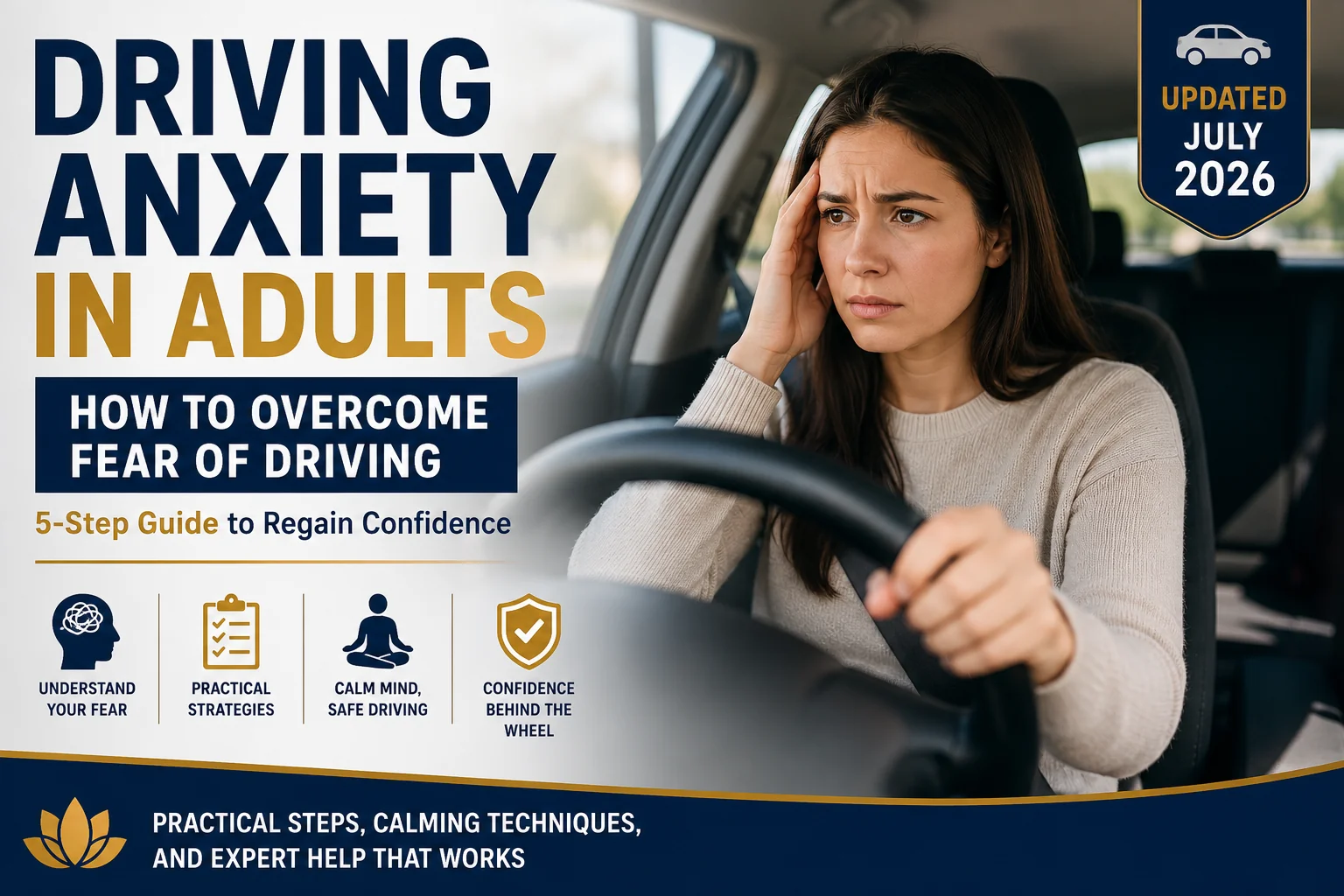
Driving anxiety in adults is treatable through gradual exposure, breathing-based panic control, and — for persistent cases — Cognitive Behavioral Therapy (CBT). It affects new drivers and experienced drivers alike, often triggered by a past accident, a near-miss, or a specific situation like highways or bridges. Updated July 2026.
In this guide, you’ll find:
- A 5-step exposure plan you can start today
- Techniques to stop a panic attack while you’re behind the wheel
- Guidance on when to bring in a professional instructor for nervous drivers or a therapist
What Causes Driving Anxiety in Adults?
Driving anxiety usually falls into one of four patterns: performance anxiety, trapped-sensation anxiety, trauma-based anxiety, and panic-attack fear. Identifying which pattern fits you matters because the fix is different — trauma-based anxiety usually benefits more from CBT, while performance anxiety often resolves with practice alone.
Performance Anxiety
Fear of making a mistake, getting honked at, or being judged by other drivers.
Trapped-Sensation Anxiety
Panic in gridlock, on a bridge, or in the middle lane of a highway where pulling over isn’t an option.
Trauma-Based Anxiety
Residual fear following an actual collision, a near-miss, or a highly stressful driving experience.
Panic-Attack Fear
Fear of having a sudden panic attack while driving and losing control of the vehicle.
How Do You Overcome Driving Anxiety Step by Step?
The most effective method for driving anxiety is gradual exposure — also called systematic desensitization — because avoidance reinforces fear over time rather than reducing it. Build your confidence in five stages instead of forcing yourself straight into traffic.
Sit in the Parked Car
Sit in your car with the engine off for five minutes, focused only on breathing normally. This retrains your nervous system to associate the driver’s seat with calm before you add any motion.
Idle the Engine
Start the car and let it idle in place while you continue slow breathing. Notice the engine sound without reacting to it — the goal is proving the running engine isn’t a threat.
Drive an Empty Lot or Quiet Block
Move to a large empty parking lot or a familiar, low-traffic street. Keep sessions short — 10 to 15 minutes — and stop before anxiety peaks, not after.
Extend to Quiet Neighborhood Routes
Add simple intersections and slightly longer familiar routes once empty-lot driving feels routine. Bring a supportive passenger for this stage if that helps you stay regulated.
Progress to Traffic and Highways
Move to moderate traffic and highway merging only once the earlier steps feel genuinely comfortable, not just tolerable. Rushing this step is the most common reason exposure plans fail.
How Do You Manage a Panic Attack While Driving?
Stop your car in a safe location as soon as possible, then use a breathing technique to interrupt the fight-or-flight response. If you feel disconnected, a grounding exercise can help shift your brain’s focus back to your physical surroundings.
Box Breathing
Inhale for 4 seconds, hold for 4, exhale for 4, hold for 4. Repeat until your heart rate settles.
4-7-8 Breathing
Inhale for 4 seconds, hold for 7, exhale slowly for 8. The longer exhale signals your nervous system to calm down.
5-4-3-2-1 Grounding
Name five things you can see, four you can feel, three you can hear, two you can smell, one you can taste.
How Do You Stop Catastrophic Thinking Behind the Wheel?
You stop catastrophic thinking by naming the anxious thought, then replacing it with a specific, realistic alternative rather than a vague reassurance.
“What if I panic and lose control in traffic?”
“Feeling anxious is uncomfortable, but I can slow down and pull over safely if I need to.”
Keep a short list of two or three replacement statements ready — reciting a prepared thought is far easier under stress than composing one on the spot.
Should You Get Professional Help for Driving Anxiety?
Yes — if avoidance is limiting your daily life, or the exposure steps above aren’t reducing your fear after several weeks, professional support is worth pursuing.
A Specialized Driving Instructor
Many instructors offer dual-brake vehicles and structured, low-pressure sessions built for nervous or returning drivers — often the fastest way to rebuild confidence.
See Ohio’s adult abbreviated course →Cognitive Behavioral Therapy (CBT)
CBT combines the same exposure principles above with structured thought-pattern work, and is especially useful if your anxiety is tied to a specific traumatic event.
See Baton Rouge adult driving schools →What Should You Avoid When Overcoming Driving Anxiety?
Three habits commonly stall progress even when someone is genuinely trying to improve.
Skipping Steps
Jumping from empty-lot driving straight to highway merging usually backfires and reinforces the fear instead of reducing it.
Total Avoidance
Not driving at all feels like relief in the short term but strengthens the anxiety response long term — this is the avoidance loop.
Relying Only on Reassurance
Asking others to repeatedly confirm “you’ll be fine” can become its own crutch. Pair reassurance with an actual driving session, not a substitute for one.
Frequently Asked Questions
Sudden driving anxiety is usually triggered by a specific event — a near-miss, an accident, a stressful drive, or even a period of high stress in other parts of life. It can also appear after a long break from driving, since confidence fades faster than skill does. Identifying the trigger helps you choose the right recovery approach.
Start with the slowest stage of exposure: sitting in a parked car, then idling, before you drive anywhere. Post-accident anxiety often responds well to CBT alongside gradual exposure, since it addresses both the fear response and the specific memory driving it. Give yourself permission to move slowly.
Build confidence with a supportive passenger first, then gradually reduce how often they ride along on routes you’ve already mastered. Practicing the same short route repeatedly with company, then without, works better than switching to solo driving all at once.
Common symptoms include a racing heart, sweaty palms, shallow breathing, tunnel vision, and an urge to avoid driving entirely. Some people also experience full panic attacks with chest tightness or dizziness. These are stress responses, not signs of losing control of the car.
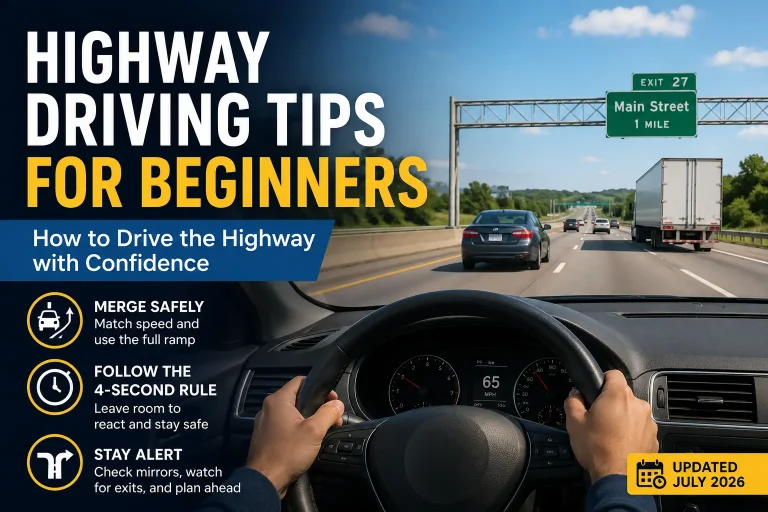
Treat highway driving as the final stage of exposure, not the starting point — build up through neighborhood and moderate-traffic driving first. When you do attempt the highway, choose a low-traffic time of day and keep the first sessions short, exiting before anxiety peaks.
Related Guides for Adult Drivers
Ready to Rebuild Your Driving Confidence?
If you’re an adult returning to driving after a long break or a stressful experience, structured lessons can make the exposure steps above easier to follow with a professional guiding the pace.