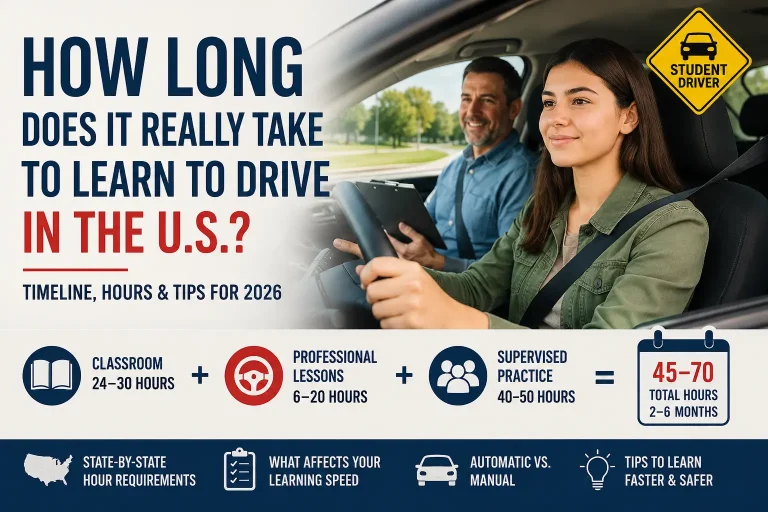
Key driving skills to practice before a driving test including parallel parking lane changes full stops and blind spot checks

Driving Test Checklist for Beginners: What to Bring & Know Before Test Day

Taking your driving test for the first time can feel exciting but also stressful. Many beginner drivers fail for reasons that are completely avoidable β€” forgetting required documents, showing up with a vehicle issue, or missing basic safety checks during the exam.

The good news? A simple checklist can help you avoid last-minute mistakes. This guide covers everything beginners need before test day, including required paperwork, vehicle checks, driving skills to practice, common mistakes to avoid, and how to stay calm during your road test.

⚠️ This checklist is based on common DMV requirements, driving school recommendations, and beginner road test preparation standards. Since rules can vary by state, always confirm details with your local DMV before your appointment.

βœ“ Quick Driving Test Checklist

Use this quick checklist the night before your road test β€” save it or bookmark this page for easy reference:

βœ… Learner’s permit
βœ… Valid photo ID
βœ… Appointment confirmation
βœ… Vehicle registration
βœ… Proof of insurance
βœ… Working headlights
βœ… Working brake lights
βœ… Working turn signals
βœ… Properly adjusted mirrors
βœ… Functional seat belts
βœ… Working windshield wipers
βœ… Parking brake working properly
βœ… Enough driving practice completed
βœ… Comfortable shoes
βœ… Arrive 15–30 minutes early
PRO TIP

Many students boost their confidence before test day by working with a professional instructor. Learn how driving schools help you pass your test faster β†’

πŸ“„ What Documents Should You Bring?

Showing up without proper paperwork can prevent you from taking your test entirely. Make sure you have all of the following:

πŸͺͺ
Learner’s Permit
Most states require a valid learner’s permit before you can take the road test.
πŸš—
Vehicle Registration
Your test vehicle’s registration must be current and up to date.
πŸ›‘οΈ
Proof of Insurance
Most DMV examiners will ask for active insurance documentation.
πŸͺͺ
Valid Identification
Some states require an additional government-issued photo ID.
πŸ“‹
Driving Log
Teen drivers may need proof of completed supervised driving hours.
πŸ“…
Appointment Confirmation
Bring printed or digital confirmation if your DMV requires it.

🚘 Pre-Drive Vehicle Checklist

Before your driving test begins, the examiner may inspect your vehicle. A failed inspection could cancel your test immediately. Check these items the morning of your test:

πŸ”¦ Exterior Checks
  • Headlights
  • Brake lights
  • Turn signals
  • Hazard lights
  • Tires (properly inflated)
  • All mirrors (no cracks)
  • License plates visible
πŸͺŸ Interior Checks
  • Horn working
  • Seat belts functional
  • Windshield wipers
  • Defroster working
  • Parking brake
  • Dashboard controls
  • Rearview mirror adjusted

πŸ’‘ Also: clean your windshield and remove any dashboard clutter before arriving at the DMV.

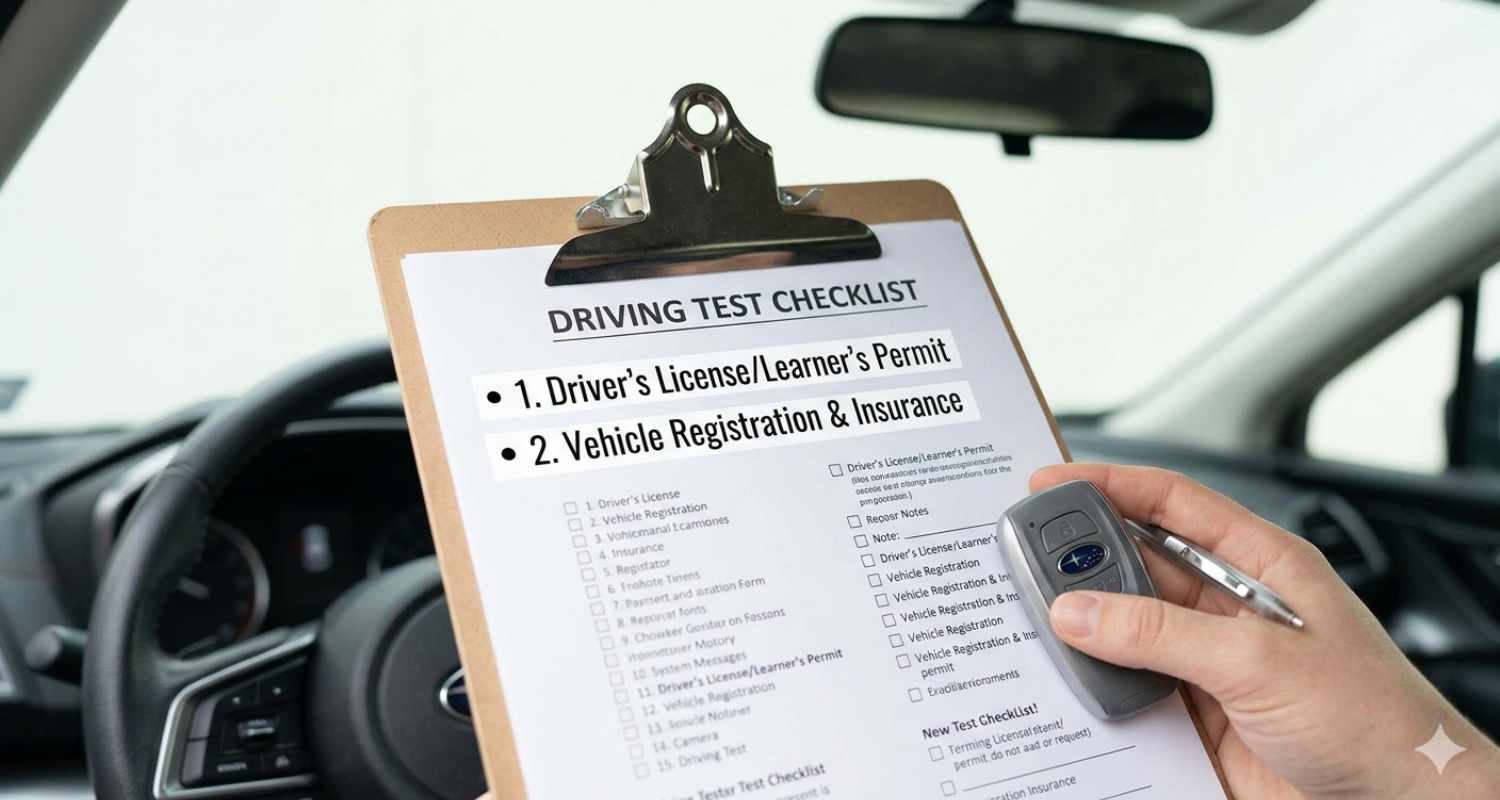
Driving test prep essential checklist infographic showing required documents including learner's permit, vehicle registration, and proof of insurance, alongside a vehicle safety inspection guide covering headlights, turn signals, windshield wipers, brake lights, tire pressure, and seat belts
Driving Test Prep: Required documents checklist and vehicle safety inspection guide for beginners

🎯 Driving Skills to Practice Before Test Day

Even confident drivers should review key maneuvers before their road test. Focus on these six critical skills:

01
Parallel Parking
Practice parking between cones or vehicles. Some states still require this skill on the test.
02
Lane Changes
  • Check mirrors first
  • Use turn signals
  • Check blind spots
  • Move lanes smoothly
03
Turning at Intersections
  • Come to a full stop
  • Yield properly
  • Correct lane positioning
04
Reverse Driving
Many driving tests include backing up in a straight line. Practice until it feels natural.
05
Speed Control
Stay close to posted speed limits. Avoid driving too fast or too slow β€” both raise red flags.
06
Blind Spot Checks
Examiners watch this closely. Always physically turn your head β€” mirrors alone aren’t enough.
Key driving skills to practice before road test infographic illustrating four essential maneuvers: parallel parking between cones, smooth lane changes with mirror and blind spot awareness, full stops and yielding at intersections, and blind spot checks shown from a top-down view
Key driving skills to practice before your road test: parallel parking, lane changes, full stops and yielding, and blind spot checks

πŸ“ What Happens During a Driving Test?

Knowing what to expect helps reduce anxiety. Most road tests follow this step-by-step process:

1
Check-In
Submit your documents at the DMV front desk. Have everything ready before your appointment time.
2
Vehicle Inspection
The examiner checks your car for safety compliance. A vehicle that fails inspection means no test.
3
Pre-Drive Questions
You may be asked to demonstrate basic controls such as headlights, wipers, or the parking brake.
4
Driving Portion
The examiner will test you on real road scenarios:
  • Parking
  • Lane changes
  • Stops at signs/lights
  • Turns
  • Speed control
  • Reversing
5
Final Results
The examiner tells you whether you passed or failed, often with specific feedback on any errors.

⚠️ Common Mistakes That Cause Beginners to Fail

Many driving test failures happen because of small, avoidable mistakes. Know these in advance so you don’t repeat them:

πŸ›‘
Rolling Stops
Always come to a complete, full stop at every stop sign and red light.
πŸ‘οΈ
Forgetting Blind Spots
Check mirrors AND physically turn your head. Examiners notice when you skip this.
⚑
Speeding
Stay within posted speed limits. Going too fast β€” or too slow β€” both count as errors.
↔️
Poor Lane Changes
Signal early, check mirrors, look over your shoulder, and move smoothly.
😰
Panic After Errors
One minor mistake won’t fail you β€” but panicking and making more errors will. Stay calm.

🧘 How to Stay Calm Before Your Driving Test

Feeling nervous is completely normal. These practical tips will help you walk into test day feeling composed and prepared:

😴 Get enough sleep the night before
🍽️ Eat a light, balanced meal
⏰ Arrive 15–30 minutes early
🌬️ Practice slow breathing exercises
πŸ’¬ Avoid negative self-talk
🎯 Focus on safety, not perfection

Confidence comes from preparation. The more time you spend practicing before test day, the calmer and more in control you will feel when it matters most.

πŸ—ΊοΈ Check Your State DMV Requirements

Driving test rules vary by state. Some states may require parallel parking, additional forms, or use different scoring systems. Always check local requirements before your appointment.

Helpful State-Specific Guides

πŸ”„ What Happens If You Fail Your Driving Test?

Failing once doesn’t mean you’re a bad driver.

Many people pass on their second attempt. The key is to understand exactly what went wrong and practice those specific areas before scheduling your retest.

Explore Driving Classes β†’
  • Review all examiner feedback carefully
  • Identify and practice your weak areas
  • Schedule your retest when ready
  • Stay consistent with your practice
  • Consider professional lesson support

❓ FAQs About Driving Test Preparation

What should I bring to my driving test? β–Ύ
Bring your learner’s permit, vehicle registration, proof of insurance, a valid government-issued ID, and appointment confirmation (printed or digital). Teen drivers should also bring a completed driving log if required by their state.
What are pre-drive checks? β–Ύ
Pre-drive checks are a vehicle safety inspection the examiner performs before you begin driving. They include checking your lights, mirrors, brakes, wipers, horn, and seat belts. Failing this inspection may cancel your test.
Can I use my own car for the driving test? β–Ύ
Yes, but it must meet all DMV safety requirements. Professional vehicles are often available through student driving lessons if you prefer to use a tested, compliant vehicle.
How long does a driving test take? β–Ύ
Most road tests last between 20 and 30 minutes, including the vehicle inspection, pre-drive questions, and the driving portion itself.
What mistakes cause automatic failure? β–Ύ
Dangerous driving behavior causes automatic failure β€” including speeding, running red lights, ignoring examiner instructions, or causing a near-collision. Read more in our guide on how to pass your driving test on the first try β†’
Is there a printable driving checklist PDF? β–Ύ
Some DMV websites offer printable checklists. You can also bookmark this page for quick reference β€” the checklist at the top of this article covers everything you need before test day.

Ready to Pass on Your First Try?

Passing your driving test becomes much easier when you prepare early and stay organized. Focus on these four pillars of test-day success:
βœ” Required Documents
βœ” Vehicle Safety Checks
βœ” Driving Practice
βœ” Staying Calm

Similar Posts