
How Driving Schools Help You Pass Your Driving Test Faster (Complete Guide)
Learning to drive efficiently depends on how quickly a learner can acquire, apply, and refine essential driving skills under real test conditions. Many learners take longer to pass not because of a lack of effort, but because their learning process lacks structure, feedback, and test-focused preparation.
A professional driving school improves this process by providing structured training, certified instructors, and a progressive learning system aligned with driving test requirements. This structured approach reduces learning time, prevents incorrect habits, and increases the likelihood of passing on the first attempt.
If you are looking for structured and reliable lessons, you can explore the Driving School Near Me homepage to find qualified instructors and programs suited to your needs.
Why Many Learners Take Longer to Pass the Driving Test
Many learner drivers experience delays because their training lacks consistency and direction. Informal learning environments often introduce gaps in knowledge, which later appear as mistakes during the driving test.
Common causes include:
- Inconsistent practice schedules that slow skill development
- Lack of structured progression from basic to advanced skills
- Incorrect techniques learned from non-professional sources
- Anxiety caused by unfamiliar test conditions
These issues create a fragmented learning experience where the learner is not fully prepared for real test scenarios. Understanding what to expect from your first driving lesson helps establish a structured foundation early and reduces the risk of developing ineffective habits.
How Driving Schools Speed Up the Learning Process
Driving schools accelerate learning by controlling three key factors: structured progression, continuous feedback, and targeted skill development.
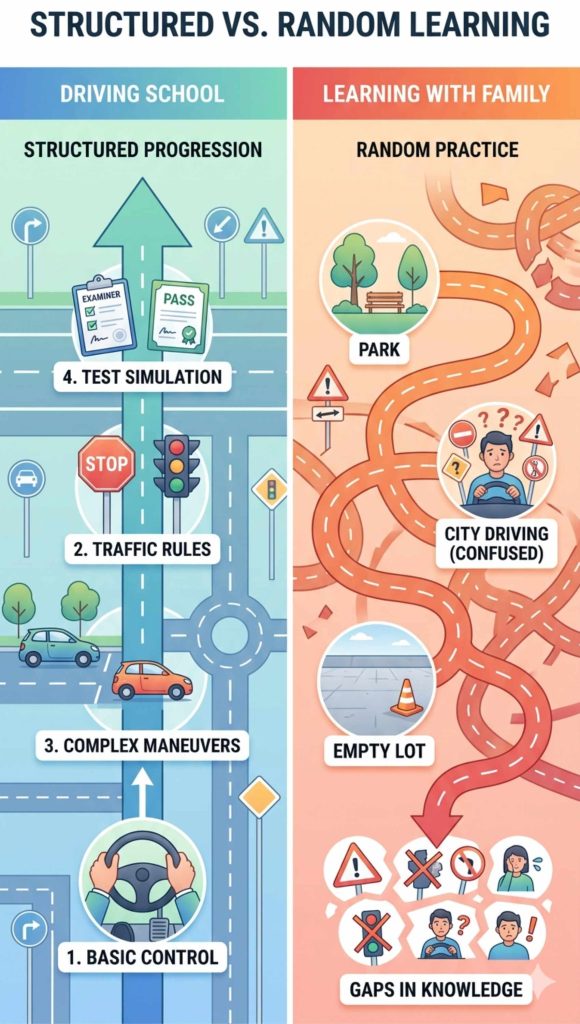
A structured curriculum ensures that each skill is introduced and practiced in a logical sequence. Instead of random practice, learners move from basic vehicle control to advanced driving situations in a controlled and measurable way.
Professional instructors play a central role in this process. They monitor performance in real time and provide immediate corrections. This feedback loop is critical because it prevents the reinforcement of incorrect habits, which are difficult to unlearn later.
Structured Lessons vs Random Practice
Structured lessons follow a predefined sequence where each session builds on previous learning outcomes. This method reduces cognitive overload and allows the learner to focus on mastering one skill at a time.
In contrast, random practice often leads to repetition without improvement because there is no clear objective or progression.
Learning Test-Specific Skills Faster
Driving schools focus on the exact skills required for the driving test. These include controlled maneuvers, observation techniques, and decision-making under real traffic conditions.
By prioritizing test-relevant skills, learners avoid spending time on non-essential practices and progress more efficiently.
Immediate Feedback from Instructors
Immediate feedback ensures that mistakes are corrected at the moment they occur. This prevents the development of incorrect driving patterns and reinforces correct behavior through repetition.
Over time, this process leads to faster skill acquisition and improved consistency during test performance.
Key Driving Skills That Help You Pass Faster
Passing the driving test requires the integration of multiple skills that must be performed consistently and under pressure. These skills are evaluated both individually and collectively during the test.
For a detailed breakdown of how these skills are assessed, refer to how to pass your driving test on the first try, which explains examiner expectations and scoring criteria.
Parallel Parking and Reversing
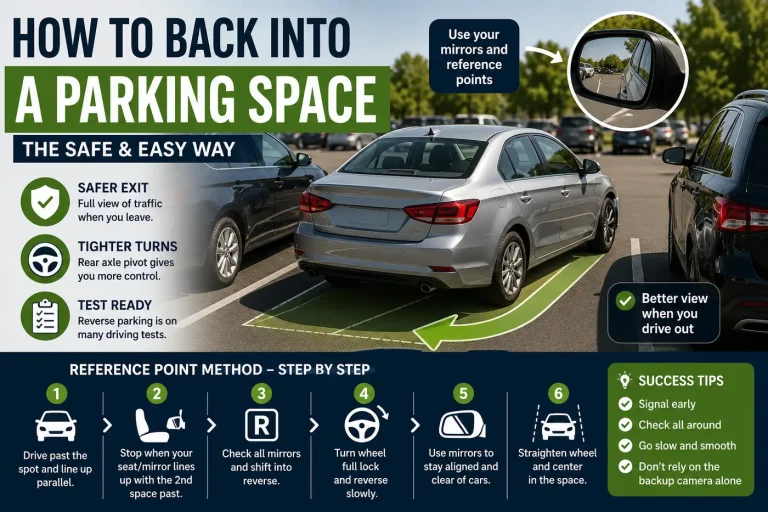
Parking and reversing are technical maneuvers that require precision and spatial awareness. Driving schools provide repeated, structured practice to ensure these skills are performed accurately and confidently.
Observation and Mirror Checks
Observation is a critical component of safe driving. Proper use of mirrors and consistent environmental awareness demonstrate to the examiner that the learner can anticipate and respond to changing road conditions.
Smooth Control and Decision Making
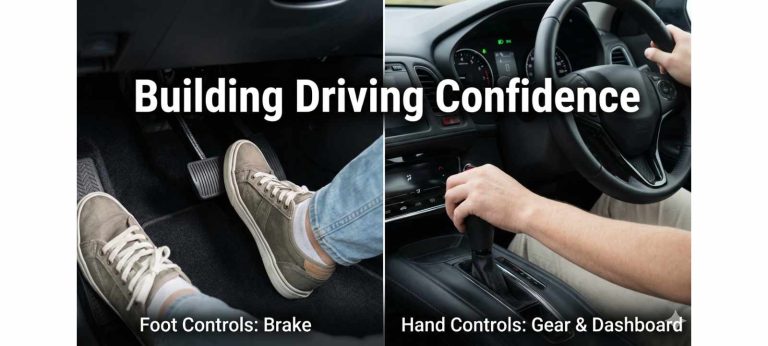
Smooth acceleration, braking, and steering indicate control and confidence. Examiners assess whether the learner can make safe and timely decisions without hesitation or abrupt actions.
Intensive Driving Courses – Can You Pass in 1–2 Weeks?
Intensive driving courses are designed to compress the learning process into a shorter time frame. These programs typically involve daily lessons that focus on rapid skill development and test preparation.
The effectiveness of these courses depends on several factors:
- The learner’s ability to absorb and apply information quickly
- The consistency of practice during the course
- The quality of instruction provided
While some learners can become test-ready within one to two weeks, others may require additional time to reach the required level of competence.
Mock Driving Tests and Real Exam Simulation
Mock driving tests simulate the conditions of the actual driving test. This allows learners to experience the structure, timing, and expectations of the exam in a controlled environment.
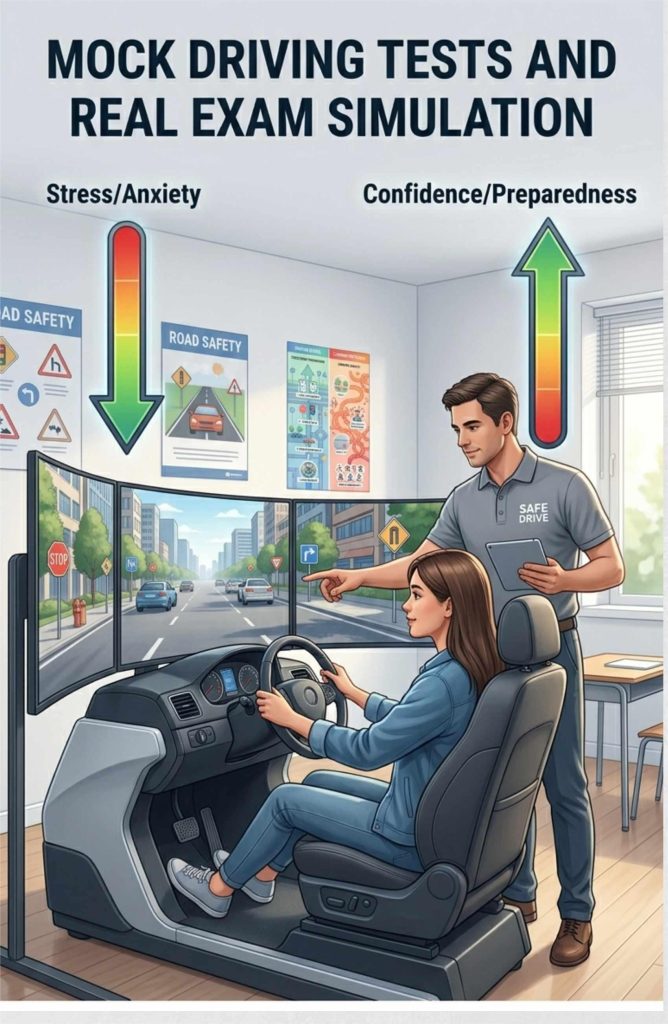
These simulations serve two primary purposes:
- Identifying weaknesses before the actual test
- Familiarizing the learner with examiner behavior and test format
By reducing uncertainty, mock tests improve readiness and increase the likelihood of performing well under real test conditions.
How Driving Schools Build Confidence and Reduce Anxiety
Driving test anxiety is often caused by uncertainty and lack of exposure to real driving conditions. When a learner is unfamiliar with test scenarios, cognitive load increases, which negatively impacts performance.
Driving schools address this issue through gradual exposure to real-world environments. Learners are introduced to different traffic situations, road types, and driving challenges in a structured manner.
As exposure increases, the learner becomes more comfortable and confident. This familiarity reduces anxiety and allows for better decision-making during the test.
Additionally, repeated practice under instructor supervision reinforces a sense of control. Confidence is built through consistency, which directly improves test outcomes.
Driving School vs Learning with Family – Which Is Faster?
| Factor | Driving School | Learning with Family |
| Structure | Structured curriculum | Unstructured practice |
| Feedback | Professional and immediate | Limited and inconsistent |
| Skill Development | Test-focused | General driving exposure |
| Progress Speed | Faster and measurable | Slower and variable |
Learning with family can provide basic exposure, but it often lacks the structure and expertise required for efficient test preparation. Professional instruction ensures that all required skills are covered systematically.
To better understand lesson types, refer to manual vs automatic driving lessons to choose the most suitable approach for your learning style.
Realistic Timeline: How Fast Can You Pass Your Driving Test?
The time required to pass the driving test varies depending on the learning method and individual ability.
| Learning Method | Estimated Time |
| Intensive Course | 1–2 weeks |
| Regular Driving School | 3–6 weeks |
| Informal Learning | 2–6 months |
Structured training significantly reduces the time required by eliminating inefficiencies and focusing on test-relevant skills.
Is Joining a Driving School Worth It for Passing Faster?
Driving schools provide a systematic and efficient approach to learning that is difficult to replicate through informal methods. By combining structured lessons, expert instruction, and targeted practice, they increase both learning speed and success rates.
Key benefits include:
- Faster skill development through structured training
- Higher probability of passing on the first attempt
- Improved confidence and reduced anxiety
- Development of safe and consistent driving habits
If your goal is to pass your driving test efficiently and with confidence, professional training is a practical and effective solution. You can explore the Driving School Near Me homepage to find a suitable program and begin your learning journey.
Final Thoughts
Passing the driving test quickly requires more than practice. It requires structured learning, consistent feedback, and focused preparation aligned with test requirements.
Driving schools provide this framework, allowing learners to progress efficiently while building the skills and confidence needed for success. By following a structured approach, you not only pass faster but also develop safer driving habits that benefit you beyond the test.