
Signs of a Good Driving School: How to Choose the Right Driver Training Program
Learning how to drive is a major step toward independence, but it also comes with serious responsibility. The driving school you choose plays a huge role in how safely and confidently you learn to operate a vehicle.
Many new drivers assume all driving schools provide the same training. In reality, the quality of instruction can vary widely. A good driving school focuses not only on passing the driving test but also on developing safe driving habits, strong situational awareness, and responsible decision-making on the road.
When evaluating a driving school, you should look beyond basic advertising claims. Factors such as instructor qualifications, lesson structure, training vehicles, and student reviews all reveal whether a school offers professional driver education. This guide explains the signs of a good driving school and how to choose a training program that prepares you for real-world driving.
Why Choosing the Right Driving School Matters
Driving is one of the most complex skills people learn in everyday life. Operating a vehicle requires coordination, awareness, and quick decision-making. Without proper instruction, beginners may develop bad habits that become difficult to correct later.
Professional training helps new drivers build strong fundamentals from the start. Enrolling in professional driving lessons for beginners provides structured instruction that covers vehicle control, road safety, and defensive driving techniques.
Research consistently shows that drivers who complete formal driver education are less likely to be involved in accidents compared to those who learn informally from friends or family. Professional instructors teach students how to:
- recognize potential road hazards
- maintain safe following distances
- react appropriately in emergency situations
- follow traffic laws correctly
A quality driving school also prepares students for the licensing exam while helping them gain the confidence needed to drive independently.
What Makes a Driving School High Quality
Not every driver training program offers the same level of instruction. High-quality driving schools stand out because they follow professional standards and provide a structured learning environment.
Some of the most important qualities include:
- Certified driving instructors with professional training
- Structured lesson plans that progress from basic skills to advanced driving scenarios
- Safe and well-maintained training vehicles
- Positive reputation and student feedback
- Transparent pricing and lesson packages
Reputable schools are usually licensed by local transportation authorities and follow standardized driver education programs. Many also incorporate modern teaching tools such as simulators or digital lesson tracking to improve student learning.
If you want to understand instructor qualifications in more detail, see our guide on how to choose a certified driving instructor.
10 Signs of a Good Driving School
Choosing a reliable driver training program becomes easier when you know what indicators to look for. The following signs can help you identify a driving school that provides safe, effective instruction.
Certified and Experienced Driving Instructors
The instructor is the most important part of any driving lesson. A qualified driving instructor not only understands traffic laws but also knows how to teach them effectively.
Professional instructors should:
- hold valid driver training certifications
- have several years of teaching experience
- communicate clearly with students
- remain patient during mistakes
Experienced instructors also understand how different students learn. Some drivers need more practice with parking, while others may struggle with highway driving. A skilled instructor adapts lessons to each student’s learning style.
Structured Driving Curriculum
Good driving schools follow a structured curriculum rather than random practice sessions. Lessons typically progress through several stages, allowing students to gradually build confidence.
A typical curriculum may include:
- Vehicle control and basic driving techniques
- Steering, braking, and lane positioning
- Traffic rules and road signs
- Defensive driving strategies
- Driving in urban traffic and highways
A structured curriculum ensures that students develop both technical driving skills and safe decision-making habits.
To understand how structured training works, explore complete driving lessons programs.
Modern and Well-Maintained Training Vehicles
Training vehicles are an essential part of driver education. Students should practice in vehicles that are safe, reliable, and equipped with modern safety features.
Professional driving schools maintain vehicles that include:
- anti-lock braking systems (ABS)
- airbags and seat belts
- adjustable mirrors for better visibility
- properly maintained tires and brakes
Regular vehicle inspections ensure that students learn in a safe environment.
Dual-Control Cars for Safe Training
One of the most important safety features in driving school vehicles is the dual-control system.
Dual-control cars include extra brake pedals on the instructor’s side, allowing instructors to stop the vehicle if necessary. This system provides an additional layer of safety during lessons, especially for beginner drivers.
Dual-control vehicles allow instructors to intervene quickly if a student makes a dangerous mistake, helping prevent accidents while learning.
Defensive Driving and Safety Training
High-quality driving schools emphasize defensive driving techniques rather than simply teaching students how to operate a car.
Defensive driving training helps students:
- anticipate potential hazards
- monitor surrounding traffic
- maintain safe distances from other vehicles
- react calmly during unexpected situations
Many programs include defensive driving training techniques that teach drivers how to reduce accident risk and manage difficult road conditions.
Positive Student Reviews and Reputation
A driving school’s reputation often reflects the quality of its instruction. Online reviews and testimonials provide valuable insight into student experiences.
When evaluating reviews, look for consistent feedback about:
- instructor professionalism
- effective teaching methods
- reliability of lesson scheduling
- success in passing the driving test
Schools with strong reputations typically demonstrate long-term commitment to quality training.
Transparent Pricing and Lesson Packages
Trustworthy driving schools provide clear pricing information. Students should understand exactly what is included in each lesson package.
Common lesson options include:
- hourly driving lessons
- beginner training packages
- test preparation sessions
Avoid schools that hide additional fees or pressure students into purchasing expensive packages without explanation.
Flexible Scheduling and Learning Pace
Every student learns at a different pace. A good driving school understands this and offers flexible lesson scheduling.
Professional schools may offer:
- weekend or evening lessons
- adjustable learning pace
- refresher courses for experienced drivers
Flexible scheduling allows students to learn comfortably without unnecessary stress.
Driving Test Preparation Support
Passing the driving test is a major milestone for new drivers. Quality schools provide targeted preparation to help students succeed.
Preparation may include:
- mock driving tests
- practice on common test routes
- feedback on maneuver techniques such as parking and lane changes
Many students benefit from driving test preparation lessons before their official exam.
Clear Communication and Professional Instructors
Professional instructors communicate calmly and clearly during lessons. They provide constructive feedback and help students learn from mistakes without creating unnecessary stress.
Clear communication helps students understand:
- traffic rules
- vehicle control techniques
- safe decision-making strategies
A supportive instructor creates a learning environment where students feel comfortable asking questions and improving their skills.
Red Flags to Avoid When Choosing a Driving School
While many driving schools provide quality instruction, some operate with poor standards. Recognizing warning signs can help you avoid unsafe training environments.
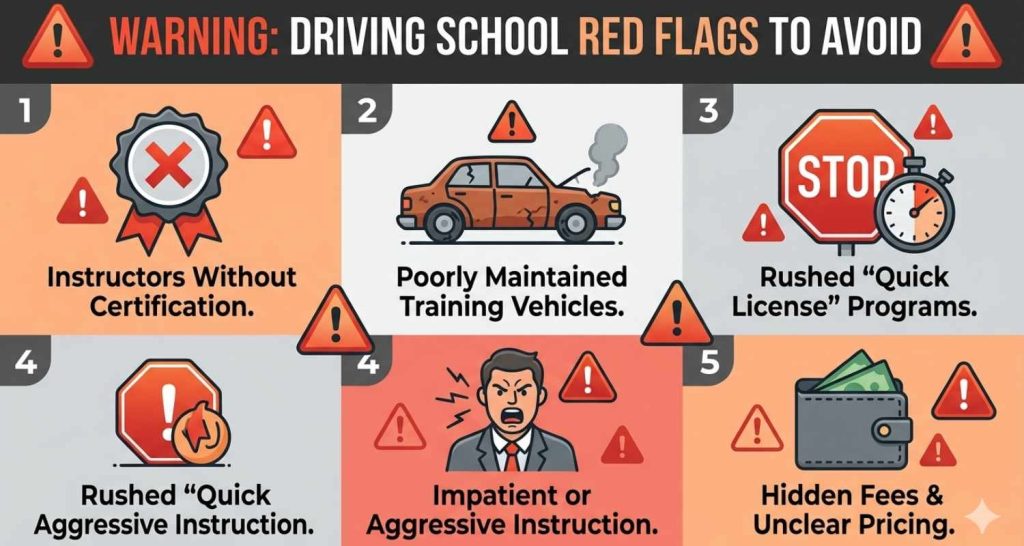
Common red flags include:
- instructors without proper certification
- poorly maintained vehicles
- rushed training programs promising quick licenses
- aggressive or impatient instructors
- unclear lesson pricing
If a driving school demonstrates several of these warning signs, it may not provide reliable training.
Questions to Ask Before Enrolling in a Driving School
Before committing to lessons, it is important to evaluate the school carefully. Asking the right questions can reveal whether a program meets professional standards.
Important questions include:
- Are your instructors certified and licensed?
- What safety features do training vehicles include?
- How long are driving lessons?
- What is your average driving test pass rate?
- Do you provide mock driving tests?
These questions help ensure you choose a program that supports safe and effective learning.
Benefits of Professional Driving Lessons
Professional driver education provides long-term benefits beyond simply passing the driving test.
Drivers who complete professional training often develop:
- better hazard awareness
- stronger vehicle control skills
- improved confidence behind the wheel
- safer driving habits
Many insurance providers also offer discounts for drivers who complete certified driver education programs.
Driving School Checklist for Beginners
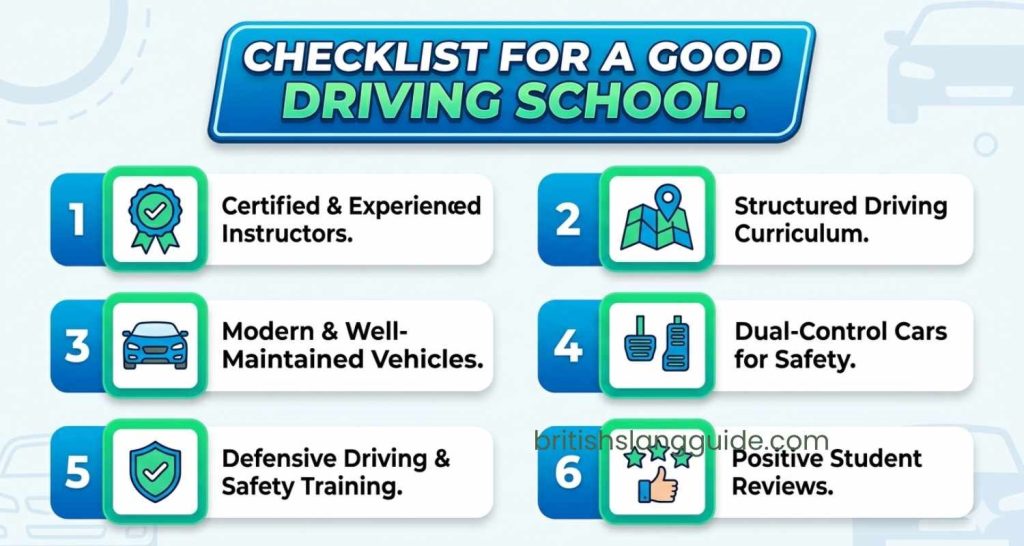
Use this checklist when comparing driving schools:
Certified instructors with teaching experience
Structured curriculum including defensive driving
Modern training vehicles with safety features
Dual-control cars for safe instruction
Positive reviews and strong reputation
Transparent pricing and lesson packages
Flexible scheduling options
Driving test preparation support
This checklist can help you identify a professional driver training program.
Frequently Asked Questions
How many driving lessons do beginners need?
Most beginner drivers require 20 to 40 hours of practice, depending on their confidence level and previous experience.
Are professional driving lessons worth it?
Yes. Professional instruction improves road awareness, increases test success rates, and helps drivers develop safe habits.
Can adults take driving lessons?
Absolutely. Many driving schools offer lessons specifically designed for adult learners.
What should I look for in a driving instructor?
Look for instructors who are certified, patient, experienced, and able to communicate clearly with students.