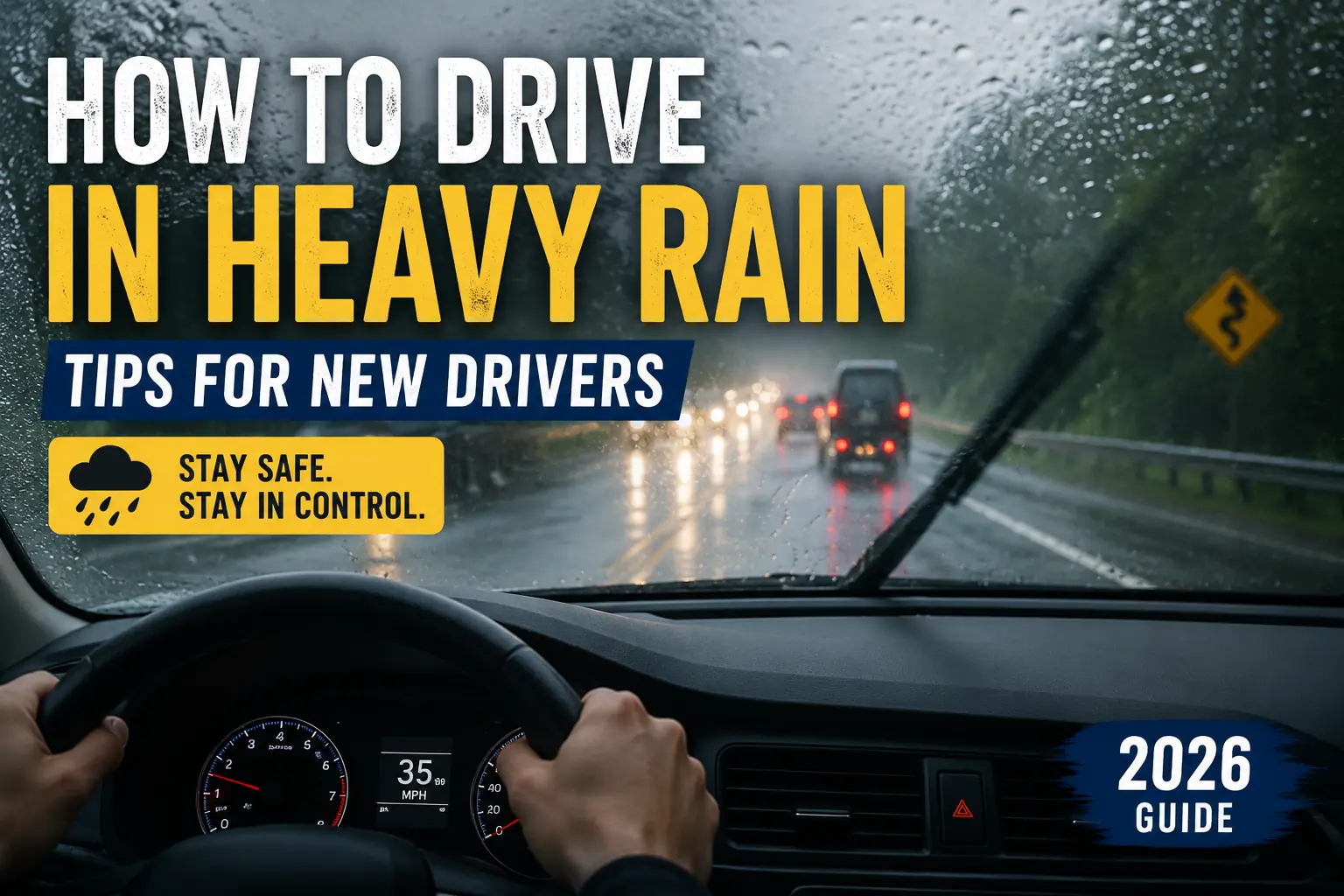
How to Drive Safely in Heavy Rain – A 2026 Guide for New Drivers
Updated July 2026
Driving in rain means slowing down by about a third, doubling your following distance to at least 6 seconds, and turning off cruise control the moment the road gets wet. These three changes prevent most rain-related crashes, especially for new drivers who haven’t felt a car lose traction before.
Heavy rain doesn’t just cut visibility — it changes how your tires grip the road and how far your car needs to stop. Most rain accidents happen because drivers keep their dry-road habits in wet conditions.
In this guide, you’ll find:
☂What Are the Most Important Rules for Driving in Heavy Rain?
The core rules are simple: slow down, add space, and turn your headlights on — even in daytime. Rain reduces tire grip by a significant margin, which means the braking distance you’re used to on dry pavement no longer applies. This is the same principle behind driving safely on ice — reduced traction changes your stopping distance no matter what’s causing it. New drivers often don’t adjust speed until they’ve already started sliding, which is too late to prevent it.
| Condition | Following Distance | Speed Adjustment | Headlights | Cruise Control |
|---|---|---|---|---|
| Dry road | 3 seconds | Normal | As needed | Safe to use |
| Heavy rain | 6 seconds | Reduce by about 1/3 | On, low beams only | Turn off |
✓How Do You Stay Safe Driving in Heavy Rain — Step by Step?
Slow Down Before You Need To
Reduce your speed by roughly a third as soon as rain starts falling steadily, not after you feel the car slip. Wet roads are most dangerous in the first 10–15 minutes of rainfall, when oil and grime on the pavement haven’t washed away yet. A driver going 55 mph on a dry highway should be closer to 35–40 mph once rain is heavy. Slowing down early gives your tires more time to channel water away from the contact patch.
Double Your Following Distance
On dry roads, a 3-second gap between you and the car ahead is standard. In heavy rain, extend that to 6 seconds. This gives you the extra stopping distance wet brakes and tires need. If the car ahead of you brake-checks or stops suddenly, that extra 3 seconds is the difference between stopping in time and rear-ending them.
Turn On Your Headlights — Low Beams Only
Turn your headlights on fully, even if it’s the middle of the day, so other drivers can see your taillights through the rain. Use low beams, not high beams — high beams reflect off falling rain and water spray, which reduces your visibility instead of improving it. This is especially important on the highway, where spray from trucks can cut visibility to almost nothing for a few seconds.
Turn Off Cruise Control
Switch off cruise control as soon as the road is wet. If your tires briefly lose contact with the road, cruise control can actually apply more throttle to maintain speed — the opposite of what you want during a loss of traction. Keeping your foot on the gas gives you direct control to ease off the moment you feel the car start to slide.
Know What to Do If You Hydroplane
Hydroplaning happens when a layer of water builds up between your tires and the road, and the car briefly stops responding to steering or braking. If this happens, ease off the gas — don’t brake and don’t jerk the steering wheel. Hold the wheel straight and let the car slow down on its own until the tires regain contact with the pavement. Slamming the brakes during hydroplaning is one of the most common mistakes new drivers make, and it usually makes the slide worse, not better.
Drive in the Tire Tracks of the Car Ahead
Follow the tire tracks left by the vehicle in front of you rather than driving in the center of the lane. Their tires have already pushed some of the standing water out of the way, giving you a slightly drier path with better grip. This is a small habit, but it matters most on highways with poor drainage or worn lane grooves.
Never Drive Through Standing or Moving Water
Avoid driving through deep puddles or flooded sections of road, even if other cars are doing it. Standing water can hide potholes or washed-out pavement, and moving water as shallow as 6 inches can stall a car’s engine or cause it to float. If a road looks flooded, find another route rather than guessing at the depth.
🌙What Should You Do When Driving in Rain at Night?
Combine your rain habits with your night driving habits — slow down further, increase spacing beyond the standard 6 seconds, and rely on lane markings instead of taillights ahead of you for positioning. Rain and darkness together cut visibility more than either one alone, since wet pavement reflects glare from oncoming headlights. If you’re still building night confidence separately, night driving tips for beginners covers headlight use and glare in more detail.
⚠What Mistakes Do New Drivers Make in the Rain?
The most common mistake is braking hard instead of easing off when the car starts to slide, which usually makes a skid worse. Here are the errors that cause the most rain-related crashes:
➜What to Do Next
If you’re still building confidence behind the wheel, a structured lesson with an instructor covers rain and wet-road handling in a controlled way — something that’s hard to practice safely on your own.
?Frequently Asked Questions
Ease off the gas pedal and hold the steering wheel straight — don’t brake or turn suddenly. Braking hard during hydroplaning can make the car spin. Let the car slow down naturally until your tires reconnect with the road, then gently regain control.
Reduce your speed by about a third compared to your normal dry-road speed. On a road where you’d normally drive 55 mph, that means slowing to roughly 35–40 mph once rain is heavy enough to reduce visibility or standing water starts to form.
No. Cruise control should be turned off in wet conditions. If your tires briefly lose grip, cruise control can apply extra throttle to hold your set speed, which works against you during a skid. Keep your foot on the gas for direct control.
Use at least 6 seconds of following distance in heavy rain, compared to the standard 3-second rule on dry roads. This gives you the extra stopping distance wet brakes and reduced tire grip require.
Use low beams. High beams reflect off falling rain and water spray, which reduces your visibility instead of improving it. Low beams cut through rain more effectively and still make your car visible to others on the road.
Ready to Build Real Confidence Behind the Wheel?
Reading about rain driving is a start — practicing it with an instructor is what actually builds the skill. Find a driving school near you and get hands-on with the conditions that matter most.