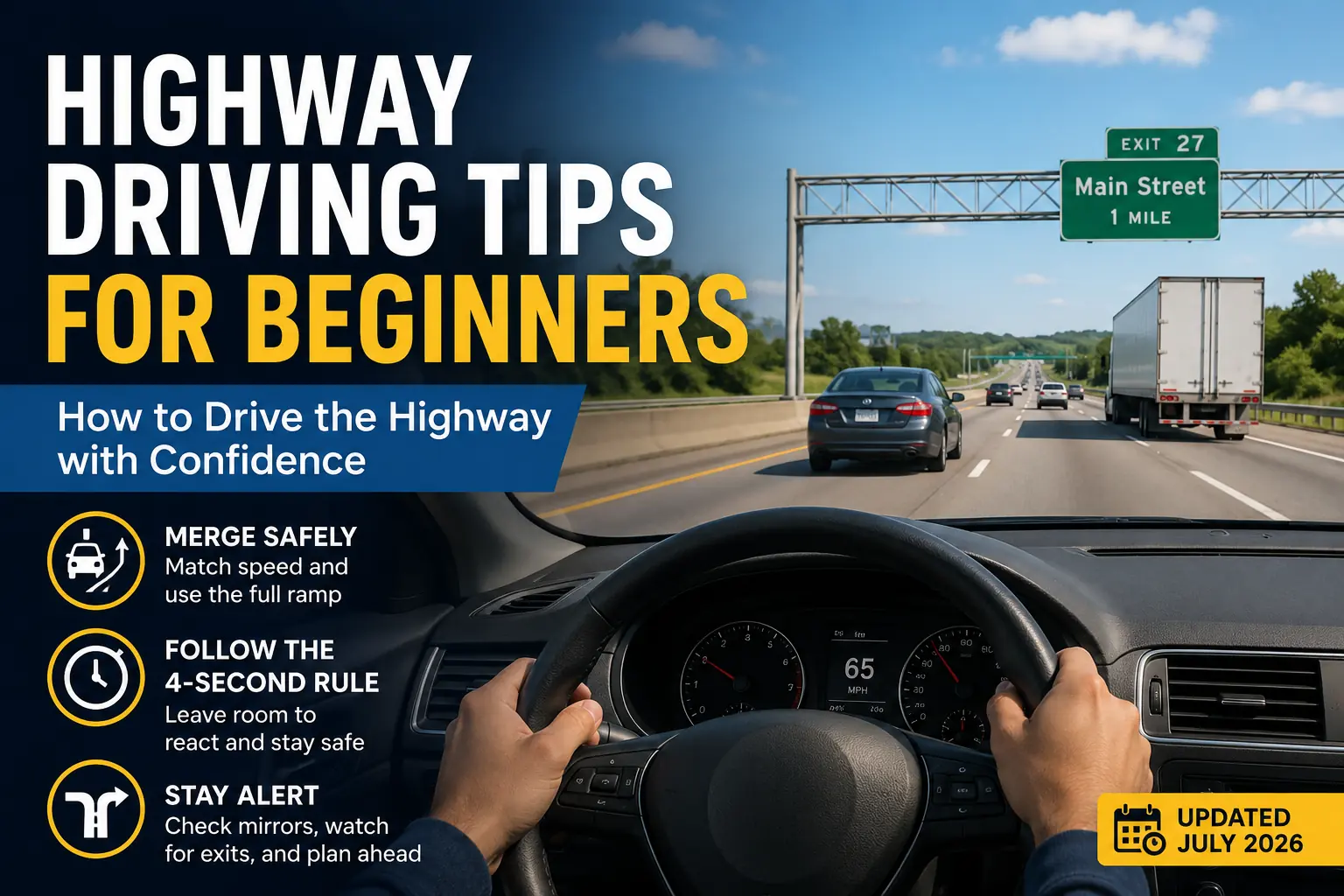
Highway Driving Tips for Beginners: How to Drive the Highway with Confidence
Updated July 2026. Highway driving tips for beginners boil down to three things: matching traffic speed on the on-ramp, leaving a 4-second gap, and looking farther down the road than feels natural. Merging into 65 mph traffic for the first time is intimidating, and that reaction is normal — it just requires a different rhythm than driving through town.
In this guide, you’ll find:
- The exact merging technique that prevents most beginner near-misses
- A simple counting trick for safe following distance
- What to do if you miss your exit, or feel anxious before you even try
How Do You Merge Onto the Highway Safely?
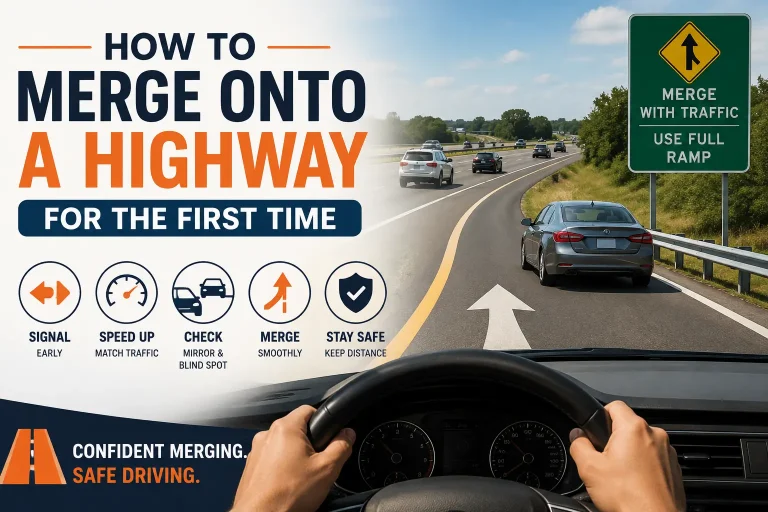
Match your speed to traffic before you merge, not after. On-ramps exist specifically as acceleration lanes, so use the full length of the ramp to get up to highway speed rather than crawling to the end and hoping for a gap.
Turn your signal on early and use your side mirror to spot an opening ahead. The most common beginner mistake is braking on the ramp — this forces the driver behind you to react and often triggers the exact panic it’s meant to avoid.
What Lane Should Beginners Drive In on the Highway?
Stay in the right lane, or the middle lane on a three-plus lane highway, while you’re building confidence. In most states, the far-left lane is legally reserved for passing, not cruising, and sitting there at a steady pace increases your odds of being tailgated.
The right lane also gives you the most direct path to an exit, which matters more than it seems on a highway you don’t know well. Once merging and lane changes feel routine, moving into the middle lane for longer stretches is fine.
How Much Space and Attention Do You Need on the Highway?
Leave at least a 4-second gap between you and the car ahead — longer than the 2–3 seconds you may have learned for city driving. Pick a fixed point ahead, like an overpass or a road sign. When the car in front of you passes it, start counting: “one-one-thousand, two-one-thousand, three-one-thousand, four-one-thousand.” If you reach that point before you finish counting, back off.
The second half of this skill is where you’re looking, not just how far back you are. Nervous drivers tend to stare at the bumper directly ahead, which causes jerky steering and delayed reactions. Aim your eyes 15 to 20 seconds down the road instead — roughly a quarter mile — so you spot brake lights and slowdowns before you’re on top of them.
How Do You Check Blind Spots Before Changing Lanes?
Signal first, check both mirrors, then glance quickly over your shoulder before you move — never rely on mirrors alone. Highway blind spots are larger than the ones you’re used to at slower speeds, and a car can sit in yours without either driver noticing.
Move over one lane at a time rather than crossing two lanes in a single motion. Keep your speed steady as you go; slowing down mid-change is what causes the car behind you to react suddenly.
How Do You Drive Safely Near Semi-Trucks?
Give trucks more space than you’d give a car, especially directly behind, directly in front, and along both sides. These are the truck’s blind zones, where the driver has little or no visibility of you.
Should You Use Cruise Control as a Beginner?
Skip cruise control in heavy traffic, rain, or anytime you’re still getting comfortable at highway speed. It’s a useful tool once you’re confident, but it delays how quickly you can slow down if traffic ahead brakes suddenly, since your foot isn’t already near the pedal.
What Should You Do if You Miss Your Highway Exit?
Stay calm and keep driving to the next exit rather than braking hard or cutting across lanes to reach the one you missed. Let your GPS reroute you — the few extra minutes cost far less than the risk of a sudden lane change.
Trying to correct a missed exit in the moment, by stopping on the shoulder or swerving across traffic, is far more dangerous than simply continuing on. This is one of the most common triggers of highway driving anxiety, and one of the easiest to plan around in advance.
How Do You Get Over Highway Driving Anxiety as a Beginner?
Pick your first few trips carefully. A dry Sunday morning has far less traffic than a weekday rush hour, and low-stakes conditions let you build the habits above without added pressure. If you’re driving on the highway for the first time completely alone, doing it right after a supervised session — rather than weeks later — keeps the habits fresh.
Reviewing common new-driver mistakes beforehand also helps, since knowing what typically goes wrong reduces the sense that anything unexpected is a crisis. Confidence comes from repetition in calm conditions, not from avoiding the highway until you feel ready.
What to Do Next
Build the fundamentals before you tackle the highway.
Essential Driving Skills for Beginners →Combining highway speeds with darkness needs its own habits.
Night Driving Tips for Beginners →Highway sections often show up on the road test itself.
How to Pass Your Driving Test First Try →Frequently Asked Questions
Pick a fixed point ahead, like an overpass, and count seconds from when the car in front of you passes it to when you reach it. Stay at 4 seconds or more. At highway speed, this buffer gives you time to brake smoothly instead of suddenly.
The right lane, or the middle lane on a wider highway, works best for beginners. It’s used for steady cruising, merging, and exiting, while the far-left lane is typically reserved for passing only in most states. Camping out on the left slows faster traffic behind you and invites tailgating.
Signal early, check your rearview and side mirrors, then glance quickly over your shoulder toward the lane you’re moving into before you steer. Mirrors alone don’t cover a highway-speed blind spot, so the shoulder check is the step that actually confirms it’s clear to move.
Start with low-traffic conditions, like a weekend morning, rather than rush hour. Practicing the merge, lane, and spacing habits above in calm conditions is what turns fear into routine — most drivers notice a real difference after three or four highway trips.
Go soon after a supervised lesson rather than waiting weeks, and pick a quiet time of day. Stick to a route you already know, and treat it as practice rather than a test — one calm trip builds more confidence than reading about it does.
Stay calm and continue on to the next exit rather than braking hard or cutting across multiple lanes to reach the one you missed. Let your GPS reroute you from there — it costs a few extra minutes and is far safer than a last-second lane correction.
It’s fine once you’re confident, but skip it in heavy traffic, rain, or during your first several highway trips. Cruise control delays your reaction time if the car ahead brakes suddenly, which matters most while you’re still building the habit of watching far ahead.
Ready to Practice Highway Driving With an Instructor?
A few supervised sessions before you go solo make merging, spacing, and lane changes second nature. Compare driving schools near you to find one that fits.