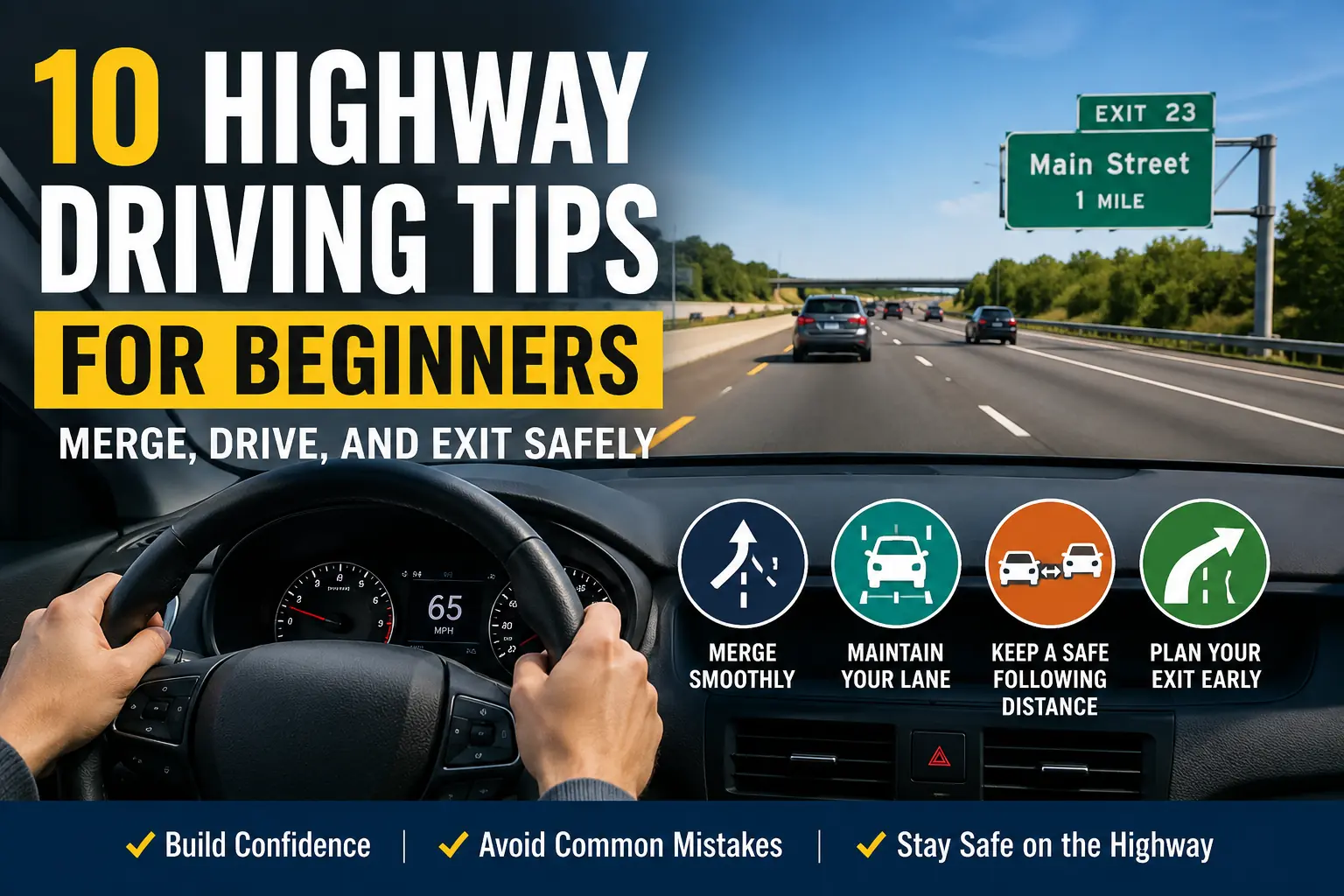
Highway Driving Tips for Beginners: How to Merge, Speed Up, and Exit Safely
Highway driving intimidates most new drivers, but ten specific habits — merging at the right speed, holding your lane, and planning your exit early — turn it from a source of panic into routine driving. Updated July 2026. Highway crashes are more often about hesitation than speed: drivers who merge too slowly or brake unexpectedly cause more near-misses than drivers who simply keep pace with traffic.
In this guide, you’ll find:
● How to merge and match traffic speed without hesitating
● The following-distance and lane rules that keep you safe at higher speeds
● What to do if you miss your exit or feel anxious behind the wheel
What Are the Best Highway Driving Tips for Beginners?
These ten habits cover every phase of highway driving, from merging to exiting, in the order you’ll actually use them.
1. Check Your Route and Vehicle Before You Go
Know your entrance ramp, your exit number, and roughly how many miles you’ll be on the highway before you pull out of the driveway. A quick glance at a map app removes the guesswork that causes last-second lane changes. Also check your mirrors and tire pressure — a small issue that’s manageable on a side street becomes stressful at 65 mph. This kind of preparation pairs well with mastering the fundamentals in our guide to essential driving skills for beginners, since highway confidence builds directly on basic car control. Practical example: set your GPS to announce the exit one mile ahead, not just at the exit itself, so you have time to move over.
2. Build Speed Fully Before You Merge
The acceleration lane exists so you can match highway speed before you merge — not so you can wait for a gap at a stop. Look over your shoulder, use your turn signal early, and accelerate steadily until your speed matches the cars already on the highway. Never stop on the acceleration lane unless it physically ends; stopping is far more dangerous than merging a little close. Practical example: pick a car in the lane you’re merging into and aim to match its speed by the time you reach it.
3. Match the Flow of Traffic, Not Just the Speed Limit
Driving significantly slower than surrounding traffic is one of the most common highway mistakes new drivers make, and it’s also a hazard — it forces other cars to brake or swerve around you. Aim to move with the general flow of traffic while staying within the legal limit for the road. If traffic is moving faster than the posted limit, stay right and let faster cars pass rather than trying to keep up. Practical example: if the limit is 65 and traffic is comfortably doing 68–70, matching that flow is usually safer than rigidly holding 65.
4. Keep a Following Distance You Can Actually Stop Within
Leave at least a 3-second gap between you and the car ahead in dry conditions, and extend that in rain or heavy traffic. To check your gap, pick a fixed point — a sign or overpass — and count the seconds between when the car ahead passes it and when you do. This buffer is what gives you time to react if traffic suddenly slows.
| Condition | Following Distance | Why |
| Dry roads, light traffic | 3 seconds minimum | Gives enough time to brake if traffic ahead slows suddenly. |
| Rain or wet roads | 4–5 seconds | Wet pavement roughly doubles stopping distance. |
| Heavy or stop-and-go traffic | 3–4 seconds | A slightly larger gap keeps you from riding your brakes. |
| Fog or low visibility | 5+ seconds | Reduced sightlines mean you need more time to react to brake lights ahead. |
Practical example: in stop-and-go highway traffic, a 3-second gap also gives you a cushion so you’re not stuck riding your brakes.
5. Stay in the Right Lanes Unless You’re Passing
The left lane on most highways is a passing lane, not a cruising lane — lingering there, even at the speed limit, frustrates faster traffic and increases the odds of a tailgater sitting on your bumper. As a beginner, stay in the right-hand lanes where speeds are more consistent and exits are easier to reach. Move left only to pass, then return right. Practical example: if you notice several cars stacking up behind you in the left lane, that’s your cue to move over at the next safe opportunity.
6. Check Mirrors and Blind Spots Before Every Lane Change
Mirrors alone don’t show you everything — a car can sit directly in your blind spot without appearing in any mirror. Before every lane change, check your mirrors, signal, and glance quickly over your shoulder to confirm the lane is clear. Do this even for lane changes that feel obvious. Practical example: get in the habit of a quick shoulder check even when merging back after passing — cars close distance faster than they appear to in a mirror.
7. Give Trucks and Motorcycles Extra Space
Large trucks have much bigger blind spots than passenger cars — if you can’t see the truck driver’s mirrors, they likely can’t see you. Avoid lingering beside a truck, and give motorcycles a full lane’s width of space since they’re smaller and harder to judge distance to. Both take longer to react and appear smaller at highway speed than cars do. Practical example: when passing a truck, do it decisively and move back into your lane only once you can see its full front bumper in your mirror.
8. Stay Calm if Highway Driving Makes You Anxious
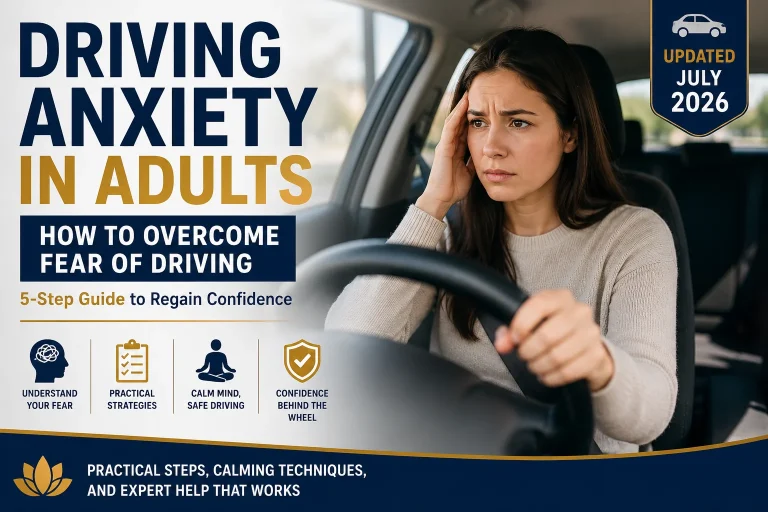
Highway driving anxiety is common for new drivers, and it usually fades with repeated, low-pressure exposure rather than avoidance. Start with short highway stretches during light traffic — early mornings or weekends — before attempting rush hour or unfamiliar routes. Deep, steady breathing and keeping your eyes moving (not fixed on the car ahead) both help you stay calm and alert. Practical example: practicing the same 10-minute highway stretch two or three times before a longer trip builds real confidence fast.
9. Plan Your Exit at Least a Mile Ahead
Move into the right lane as soon as you see the sign for your exit, rather than waiting until the exit itself. Deceleration lanes exist so you can slow down after leaving the highway, not before — don’t brake hard while still in the main lanes. Practical example: treat the “1 mile” exit sign as your cue to signal and start moving right, giving yourself time even if the lane is busy.
10. Know What to Do If You Miss Your Exit
Never stop, reverse, or cut across lanes to reach a missed exit — it’s illegal and one of the most dangerous mistakes a driver can make on a highway. Instead, continue to the next exit, use it to turn around, and get back on the highway heading the right direction. Most GPS apps will recalculate automatically. Practical example: treat a missed exit as a two-minute detour, not an emergency — it’s far safer than any attempt to fix it in the moment.
What to Do Next
Highway driving becomes automatic with repetition — the tips above are the checklist, but confidence comes from practice. For the most common errors new drivers make beyond the highway, see our guide to common mistakes new drivers make. If you’re preparing for highway sections on your road test, our guide on how to pass your driving test on the first try covers what examiners look for. And once you’re comfortable with daytime highway driving, our night driving tips for beginners guide covers the added challenges of reduced visibility.
FAQ
Is it easy to drive on the highway as a beginner?
It’s harder at first because of higher speeds and merging, but it gets easier fast with practice. Most new drivers feel noticeably more comfortable after 3–5 short highway drives in light traffic. Starting during off-peak hours makes the learning curve much smoother.
What’s the 3-second rule for following distance?
Pick a fixed point ahead, like a sign, and count the seconds between the car in front passing it and you reaching it. Three seconds is the minimum safe gap in good conditions. Add 1–2 more seconds in rain, fog, or heavy traffic.
What lane should beginners stay in on the highway?
Stay in the right-hand lanes, which have steadier speeds and easier access to exits. The far-left lane is for passing only and moves the fastest, which adds pressure new drivers don’t need while they’re still building confidence. Move left briefly to pass, then return right.
What should I do if I miss my highway exit?
Keep driving to the next exit — never stop, reverse, or cross lanes to reach a missed exit. Use the next exit to turn around and get back on in the right direction. Your GPS will usually reroute automatically within seconds.
How do I get over highway driving anxiety?
Practice short highway stretches during quiet, low-traffic times before attempting busier routes. Repeated, low-pressure exposure works better than avoiding highways altogether. Steady breathing and scanning the road ahead — rather than fixating on one car — also help you stay calm.