How Long Does It Really Take to Learn to Drive in the U.S
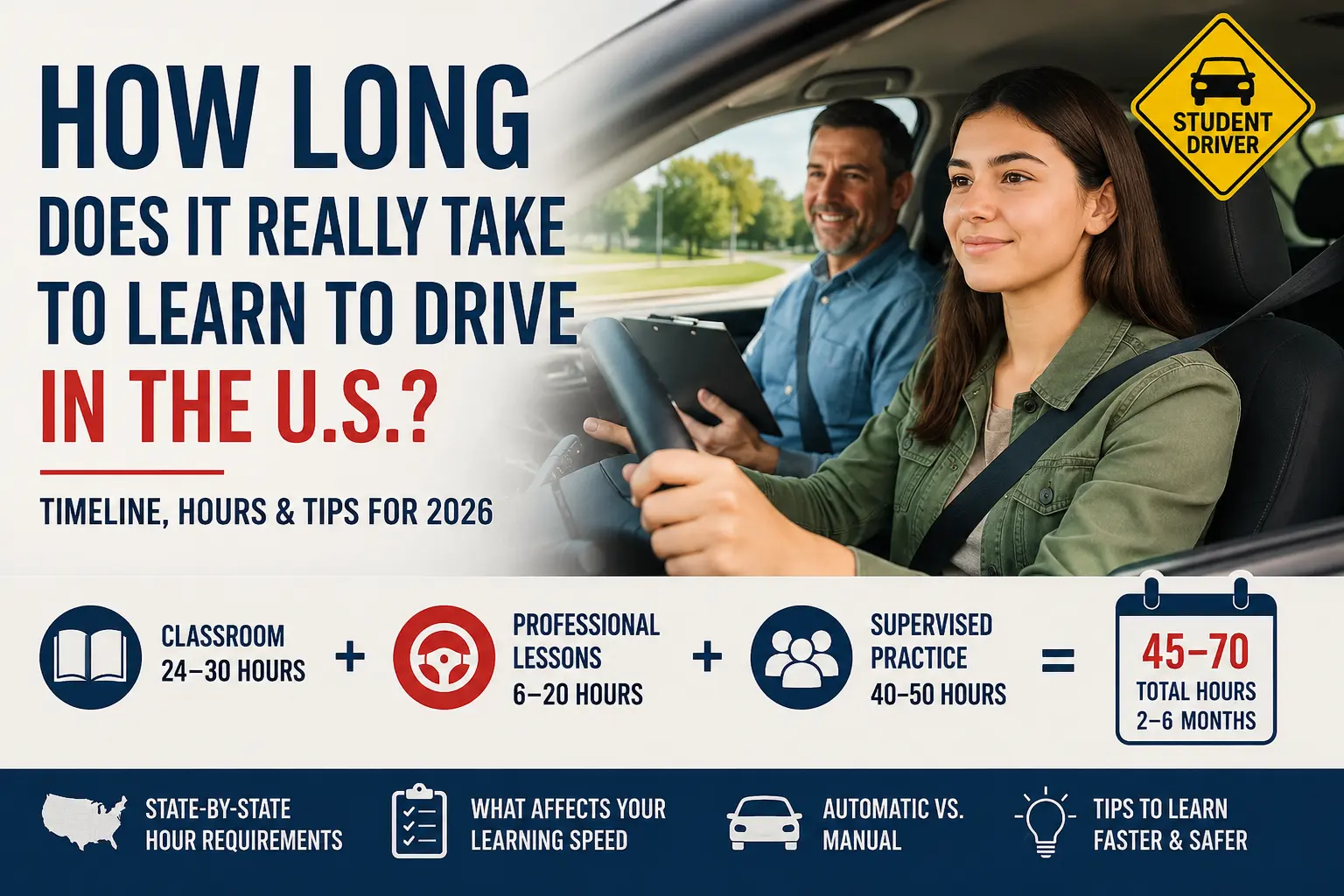
Combining classroom instruction, professional lessons, and required supervised practice, most new drivers log somewhere in the 45-70 total hour range over 2 to 6 months before they’re genuinely test-ready. Updated July 2026. The exact timeline depends on your state’s requirements, how often you practice, and whether you’re learning as a teen or an adult. In this guide, you’ll find:
• A full hour breakdown: classroom, lessons, and supervised practice
• State-by-state supervised-practice requirements for teens
• What actually speeds up or slows down learning
How Many Total Hours Does Learning to Drive Actually Take?
Most new drivers total between 45 and 70 hours of combined classroom instruction, professional lessons, and supervised practice before they’re ready to test. Classroom instruction typically runs 24 to 30 hours and is usually finished in 2 to 4 weeks, whether taken online or through a student driving lessons program. Professional instructor hours vary by state, commonly 6 hours in Washington and Massachusetts, and 8 hours in Ohio and Louisiana (South Carolina’s specific instructor-hour minimum isn’t confirmed here; flag for verification). Supervised private practice with a parent or guardian makes up the largest share, typically 40 to 50 hours depending on the state, covered in detail below.
How Many Driving Lessons Do You Actually Need?
Most beginners take somewhere between 8 and 20 professional lessons before they’re ready to test, on top of their state’s supervised-practice hours. A learner splitting time between a 6-hour driving school package and regular family practice typically needs fewer paid lessons than someone learning almost entirely with an instructor. Nervous or first-time learners often benefit from shorter, more frequent lessons rather than long infrequent ones, since skills like mirror checks and lane positioning build through repetition, not duration.
Is It Faster to Learn in an Automatic or a Manual Car?
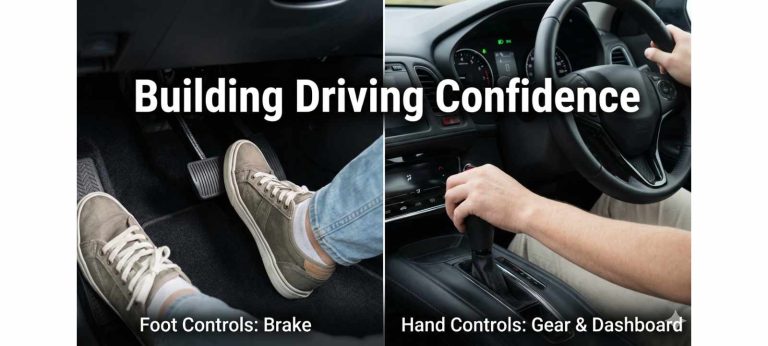
Learning in an automatic is generally faster because it removes clutch control and gear-shifting from the list of skills you’re juggling at once. Manual transmission adds a layer of coordination (clutch, gas, and gear timing) that typically adds extra lessons before a learner feels smooth in traffic or on hills. That said, a manual license usually qualifies you to drive both transmission types afterward, while an automatic-only license may restrict you to automatic vehicles in some licensing systems. If your goal is simply the fastest path to a license, automatic is the more common choice among new drivers.
What Factors Affect How Quickly You Learn to Drive?
Practice frequency matters more than any other single factor: three short sessions a week consistently beats one long session every two weeks, since driving relies heavily on habit formation rather than raw hours. Access to a practice vehicle matters too. Relying solely on scheduled driving-school appointments can stretch a 40+ hour requirement out over months, while daily access to a household car for everyday errands cuts the calendar timeline down significantly. Behind-the-wheel anxiety is normal, but structured instruction in a dual-controlled vehicle helps nervous learners build confidence faster than practicing alone in high-pressure traffic. Certified instructors also know exact test routes and state evaluation criteria.
how driving schools help you pass the test faster
How Many Supervised Practice Hours Do Teen Drivers Need by State?
Teen drivers need 40 to 50 supervised practice hours depending on their state, separate from the professional instructor hours covered above. As of July 2026, based on each state’s licensing agency:
| State / Agency | Total Supervised Hours | Required Night Hours | Official Source |
| Ohio (BMV / Ohio Traffic Safety Office) | 50 hours | 10 hours | bmv.ohio.gov (confirm exact page before publish) |
| Massachusetts (RMV) | 40 hours (30 with an approved advanced skills course) | Not specified | mass.gov/rmv (confirm exact page before publish) |
| South Carolina (SCDMV) | 40 hours | 10 hours | scdmv.net – Form DL-008A (confirm exact page before publish) |
| Louisiana (OMV) | 50 hours | 15 hours | expresslane.org (confirm exact page before publish) |
| Washington (DOL) | 50 hours | 10 hours | dol.wa.gov (confirm exact page before publish) |
Massachusetts is the one exception on this list. The standard requirement is 40 hours, but the RMV reduces it to 30 hours for teens who complete an approved advanced driver skills course (sometimes called “skid school”) in addition to standard driver’s ed.
Ohio also recently expanded its scope. Effective September 30, 2025, the state’s 50-hour practice requirement and Class D driver education now apply to all first-time applicants under 21, not just 16-17-year-olds. If you’re navigating Ohio’s adult track specifically, an abbreviated course covers a separate, shorter pathway for adult first-time applicants.
recent changes in Ohio’s driver education laws | adult abbreviated course in Ohio
Can Adults Learn to Drive Faster Than Teens?
Adults often move through the mechanical side of learning faster than teens because they already understand traffic rules, spatial judgment, and risk. But adults aren’t bound by the same mandatory permit-holding periods teens face. Many teen GDL programs require holding a permit for around 6 months before testing, which is why teen timelines often average close to 6 months even when the actual hours are similar to an adult’s. An adult who schedules lessons daily and isn’t tied to a mandatory holding period can realistically finish in 2 weeks to 2 months, especially with a structured intensive course.
How Do You Know You’re Ready for Your Driving Test?
Readiness moves through stages rather than hitting a specific number of hours logged. Most learners progress through four phases before they’re truly test-ready:
1. Vehicle control: smooth stopping, steering, and basic parking-lot maneuvers.
2. Quiet traffic: residential driving, stop signs, and simple right-of-way calls.
3. Complex driving: multi-lane roads, lane changes, and light highway driving.
4. Test prep: highway merging, parallel parking, night or rain driving, and mock test runs.
You’re likely ready when basic maneuvers like mirror checks and smooth braking feel automatic, freeing up your attention to scan for hazards instead of thinking through each mechanical step.
What Should You Do Next to Start Lessons?
Overbeke School of Driving in Ohio and NOLA Driving Institute in Louisiana offer instructor-led courses built around the factors covered above: consistent practice, confidence-building, and test readiness, rather than a fixed number of hours.
FAQ Section
Can someone learn to drive in 2 weeks?
It’s possible for adults with an intensive course and daily practice, but two weeks is an aggressive timeline for most learners. It works best for adults with some informal driving experience who just need structured lessons to close specific gaps before testing.
Is 25 too late to learn how to drive?
No, age doesn’t meaningfully limit your ability to learn. Adult learners in their 20s, 30s, and beyond often progress at a similar pace to teens once they commit to consistent practice, and many driving schools offer adult-specific abbreviated courses built for this exact situation.
How long does it take to learn to drive as an adult?
Most adult learners are test-ready in 2 weeks to 2 months with regular practice, since adults typically aren’t bound by the mandatory permit-holding periods that stretch out teen timelines. The main variable is practice frequency and access to a vehicle, not age.
How many total hours does it take to learn to drive in the US?
Most new drivers log around 45 to 70 total hours across three categories: classroom instruction, professional behind-the-wheel lessons, and supervised private practice with a parent or guardian. The exact split depends on your state’s requirements, since supervised-practice minimums range from 40 to 50 hours depending on where you live.
What’s the number one reason people fail their driving test?
Observation errors, like missed mirror checks, blind spots, or failing to notice a stop sign or pedestrian, are consistently cited as a leading cause of test failures. These mistakes usually reflect a lack of built-in habit rather than a lack of raw driving skill.
Is it faster to learn in an automatic car than a manual car?
Yes, for most learners. Automatic transmission removes clutch control and gear-shifting from the list of skills you’re juggling at once, so students typically reach test-ready confidence in fewer lessons. Manual learners usually need extra time to build coordination for smooth, stall-free gear changes in traffic.