Is Driving School Actually Worth the Money in 2026?
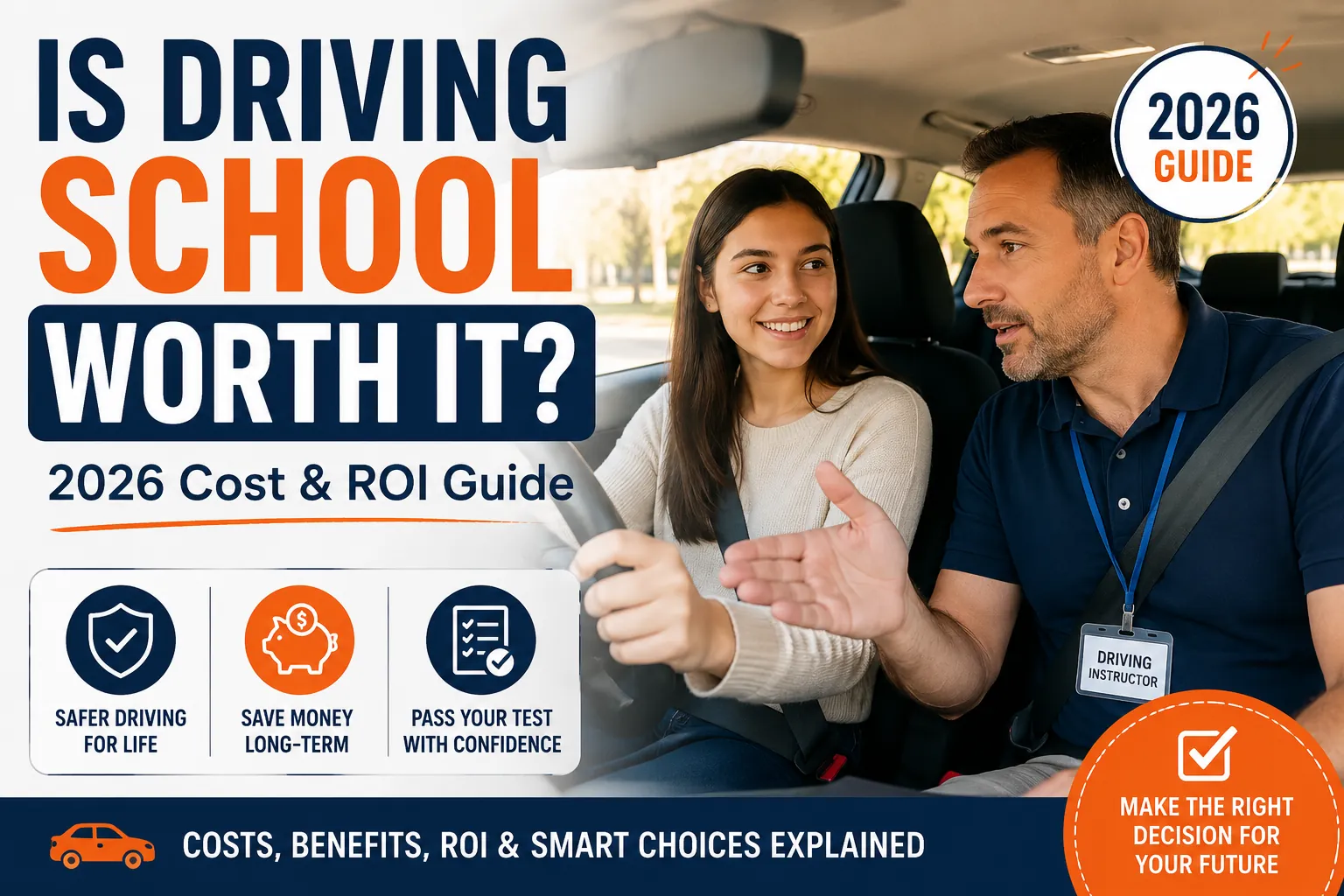
Driving school is worth it for most learners: a $300 to $800 program typically pays for itself through insurance discounts, fewer failed road tests, and safer long-term habits — even in states where professional instruction isn’t legally required. Updated July 2026.
In this guide, you’ll find:
- A side-by-side cost and value comparison
- The real financial ROI of enrolling
- What your tuition actually buys you, and how to compare it against affordable driving lessons near you
1How Does Driving School Compare to Learning from Parents or Self-Study?
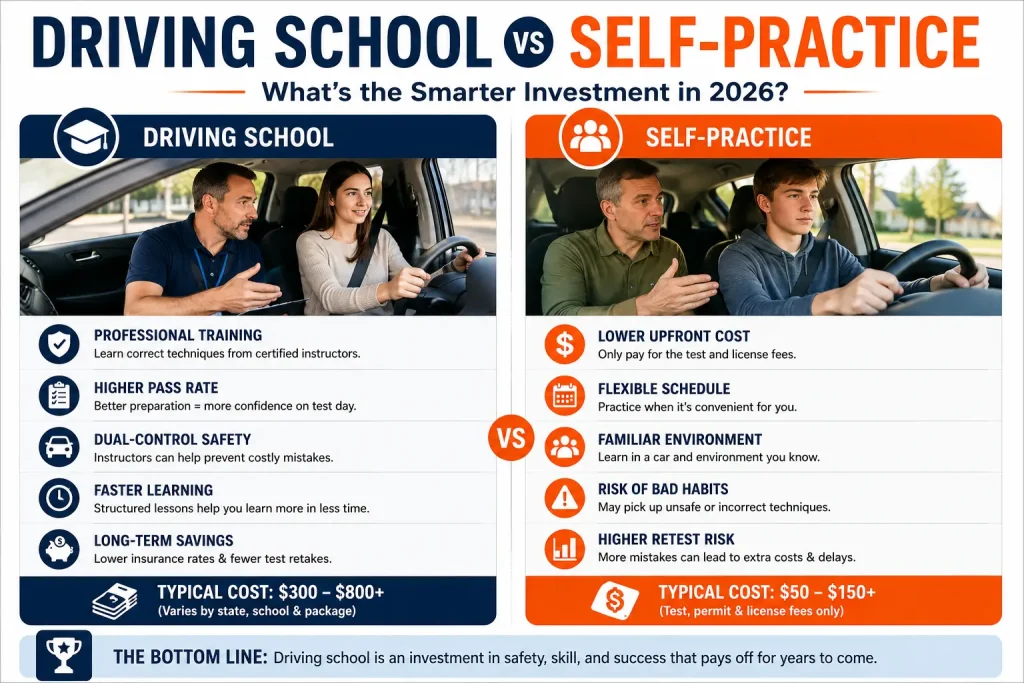
Professional instruction and informal practice differ most in safety equipment, cost, and stress level — not just price. Use the filters below to focus on one side of the comparison.
| Feature / Outcome | Driving School | Parents / Self-Practice |
|---|---|---|
| Upfront Cost | $300–$800 (teens) / ~$100/hr (adults) | Free (excluding gas, wear) Cheaper |
| First-Time Test Pass Rate | High — instructors teach local test routes Stronger | Variable, prone to minor technical fails |
| Insurance Impact | 5%–20% premium discount Stronger | None |
| In-Car Safety | Dual-control vehicle (instructor brake) Stronger | Standard vehicle, no backup control |
| Habit Formation | Standardized defensive habits Stronger | Risk of copying parental bad habits |
| Stress Level | Low, neutral environment Calmer | Often high, prone to conflict |
2Does Driving School Pay for Itself Financially?
Driving school acts as a financial shield against several hidden long-term costs, not just an upfront expense. Tap each item below to see the numbers.
Insurers often treat formally trained new drivers as lower risk, offering premium discounts of 5% to 20% for completing an accredited program. On a $2,400 annual premium, a 10% discount saves $240 a year — about $720 over three years, which can cover the entire course cost.
Most state DMVs charge a fee for every repeat road test. In Ohio, an adult who fails their first road test must complete a paid 4-hour abbreviated course before rebooking. Scheduling backlogs after a fail can also push licensing back by weeks.
A single parking-lot dent can run $500 to $1,500 out of pocket before insurance even factors in. Defensive driving skills — spatial awareness, scanning, hazard anticipation — are built specifically to prevent these early mistakes.
3What Do You Actually Get for Your Driving School Tuition?
4Do Driving Lessons Help With Driving Anxiety?
Learning from a parent often comes with tension — raised voices over minor mistakes, family friction, and test-day dread.
Professional instructors are trained to stay calm and neutral, which measurably lowers student anxiety and builds real confidence instead of fear-based caution. If nerves are your main hesitation, that alone can justify the cost over free family lessons.
5Which Alternative Should You Choose — Driving School, Parents, or Self-Teaching?
Parents or Relatives
Useful for extra supervised hours, but risky as a primary teaching method — decades of unconscious habits like rolling stops or one-handed steering get passed down and can cause an instant test fail.
Self-Teaching via Video
Good for visualizing maneuvers like parallel parking, but offers no real-time feedback and can’t intervene if something goes wrong.
Professional Driving School
Requires upfront cost and scheduling, but remains the lowest-stress, most consistent path to a license.
6How Can You Get the Best Value From a Driving School?
Look for hybrid options
Taking classroom theory online and paying only for behind-the-wheel hours can save $50–$100. See 6-hour driving school pricing for how hourly blocks are priced.
Ask about first-time pass rates
Reputable schools track and share this number.
Confirm state approval
Your completion certificate only qualifies for insurance discounts if the school is properly certified.
Watch for red flags
Review the signs of a good driving school before enrolling.
For examples of transparent, well-structured pricing, Safe Pass Driving School in Ohio, CMSC Driving School in West Boylston, MA, and 843LetsDrive in South Carolina all publish clear packages and curriculum details worth comparing before you enroll.
7Is Driving School Worth It? The Bottom Line
Between insurance discounts, avoided retest fees, and accident prevention, driving school tuition typically pays for itself within the first few years of driving. Add in lower family tension and reduced test-day anxiety, and for most learners the answer is yes. Once you’ve decided to enroll, our guide on how to pass your driving test on the first try covers what to do next.
Ready to Compare Driving Schools Near You?
See real pricing, reviews, and course details before you enroll.
8FAQ: Is Driving School Worth It?
Not for most drivers. Between insurance discounts of 5–20%, avoided retest fees, and lower accident risk, a $300–$800 course typically pays for itself within a few years of driving.
Most teen packages run 6–8 weeks combining classroom and behind-the-wheel hours. Adult abbreviated courses can be as short as 4–6 hours total, depending on your state.
Reddit threads on the topic generally lean toward yes, with commenters citing calmer instruction, dual-control safety, and insurance savings as the main reasons over learning from family.
Yes. A neutral, professional instructor removes family tension from the equation, which most students find lowers stress and builds confidence faster than learning from a parent.
Teen packages typically run $300–$800; adult lessons run about $100 per hour. Exact pricing varies by state and school — always confirm current rates directly.
If your budget allows it, yes — instructors provide real-time correction and a dual-control brake, both of which self-teaching and video tutorials can’t replicate.